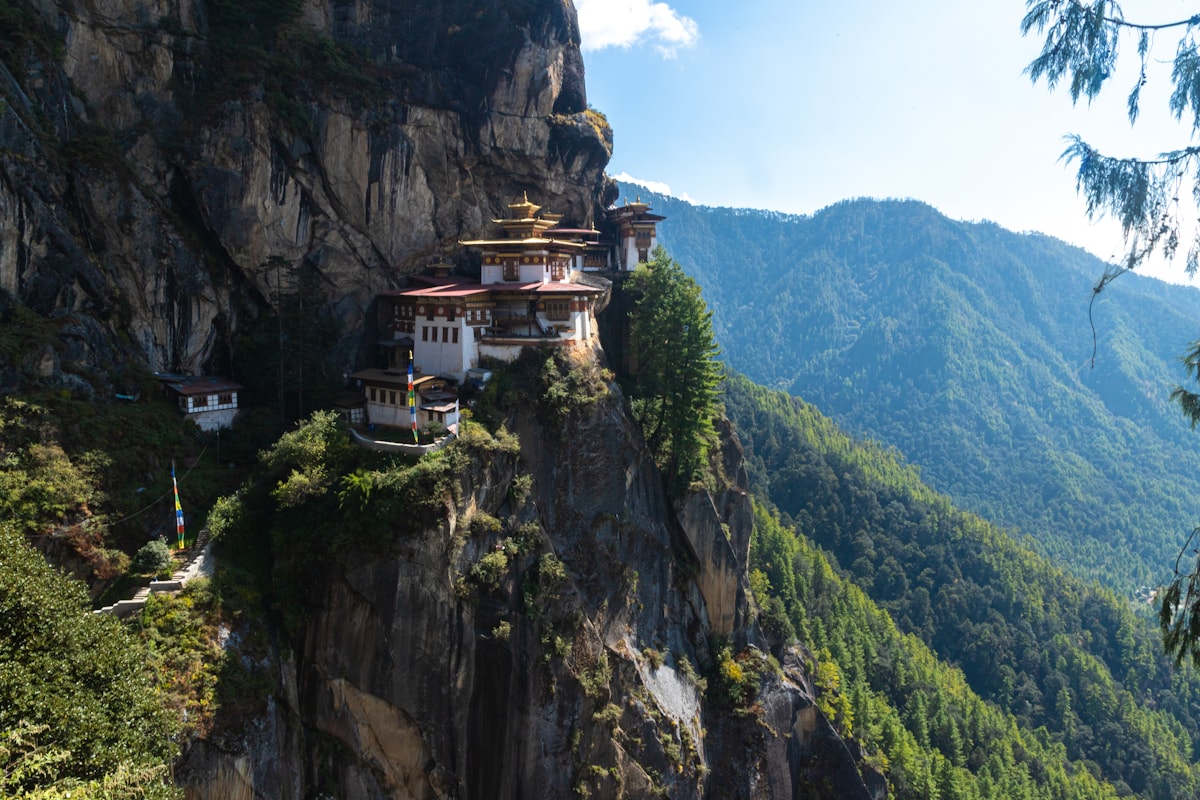
Bhutan, Bhutan
Asia

Bhutan Itinerary

Bhutan

The last Himalayan kingdom — monasteries, dzongs, and serenity.

The last Himalayan kingdom — monasteries, dzongs, and serenity. This Bhutan travel guide turns that into a tailored 1–4 day itinerary — the anchor tables worth booking ahead, where to base yourself, Bhutan food like Ema datshi, and the best time to go — planned hour by hour so your trip runs the way locals live it.

Language
Dzongkha
Currency
Ngultrum (Nu)

Loading rate…

Best months
Mar–May, Sep–Nov
When to avoid
Jun–Aug (monsoon); Dec–Feb (cold)

Build your Bhutan itinerary

Choose how many days you have and we'll lay out a day-by-day plan built around the experiences and flavors you can only get here. Pick your trip length below.

Trip length
A tailored 3-day plan for Bhutan
Day 1

Paro & the Tiger's Nest

TAKTSANG · PARO VALLEY · DZONG
  1. ~7:30a
  2. ~11:00a
  3. ~1:30p
  4. ~3:30p
  5. 7:30p

Bhutan requires a guide and a daily Sustainable Development Fee — your trip is arranged end to end through a licensed operator or lodge. The Tiger's Nest hike is strenuous at altitude; take it slowly and acclimatize first.

Day 2

Thimphu — the Capital

THIMPHU · BUDDHA DORDENMA · CRAFTS
  1. ~8:30a
  2. ~10:00a
  3. ~12:30p
  4. ~2:30p
  5. ~4:30p
  6. ~7:30p

Thimphu is the gentle, fascinating capital — small, traditional, and unhurried. The crafts and the archery give a real feel for living Bhutanese culture beyond the monasteries.

Day 3

Punakha & the Dochula Pass

DOCHULA · PUNAKHA DZONG · SUSPENSION BRIDGE
  1. ~8:30a
  2. ~11:00a
  3. ~1:00p
  4. ~2:30p
  5. ~5:00p
  6. ~7:30p

Punakha is warmer and greener than the high valleys, and its dzong is the kingdom's loveliest. The Dochula pass views depend on clear weather — mornings give the best odds of the Himalayan panorama.

On the map

Bhutan itinerary locations

17 pinned stops across the route. Tap a pin to open it in Google Maps. Hold Ctrl and scroll to zoom the map.

Map loads as you scroll
The specialty of Bhutan

What to eat in Bhutan — and what to bring home

Bhutanese food is fiery and simple — chillies treated as a vegetable, not a spice, paired with yak cheese and the country's nutty red rice.

Signature dishes

Unique local ingredients

Artisan goods to take home

Where to base yourself

Where to stay in Bhutan

  • ThimphuThe capital — dzong, markets, and the country's main hub; a common first and last base.
    Stays ›
  • ParoHome to the international airport and the Tiger's Nest trailhead — a scenic valley, often the entry point.
    Stays ›
  • PunakhaA warmer, lower valley with the beautiful Punakha Dzong — a highlight on most circuits.
    Stays ›
  • Bumthang (central)The remote spiritual heartland of temples and valleys — for longer, deeper itineraries.
    Stays ›
Compare all stays in Bhutan
On the ground

Getting around Bhutan

Travel in Bhutan is arranged through a licensed tour operator with a guide and driver — independent road travel isn't the norm for visitors — so your route between valleys (Paro, Thimphu, Punakha and beyond) is planned as one itinerary. Mountain roads are winding, making days between valleys long. Paro has the only international airport, and a Sustainable Development Fee applies to most visitors.

Book tours, tickets & experiences in Bhutan

Some links here are affiliate links — we may earn a commission at no extra cost to you. How this works.

Before you land

Know before you go to Bhutan

Local etiquette

  • You must travel with a licensed guide and pay the Sustainable Development Fee — independent wandering isn't the model here.
  • Dress respectfully at dzongs: long sleeves and long trousers, and remove hats.
  • Photography is often prohibited inside temples — always ask.

Tipping

Tipping guides and drivers at the end of a trip is customary.

Tap water

Drink bottled or boiled water.

Watch out for

The Tiger's Nest hike is a serious 2–3 hour climb at altitude — train for it. Mountain roads are winding and long; motion sickness is common.

Time it right

Festivals & events in Bhutan

Dates shift from year to year, so these are anchored to their season — always confirm the exact dates before you book flights around one.

  • March or April

    Paro TsechuBook ahead

    Masked cham dances in the dzong courtyard, ending with the unfurling of a giant silk thangka at dawn.

  • September or October

    Thimphu TsechuBook ahead

    The capital's great festival — days of masked dance and the entire valley in its finest kira and gho.

Check availability around these dates
Good to know

Bhutan travel FAQ

How many days do you need in Bhutan?
Bhutan works well as a 1-to-4-day trip. 3 days covers the essentials at a comfortable pace; add a day for slower mornings or a side trip. You can switch between plan lengths on this page.
What food is Bhutan known for?
Bhutan is known for Ema datshi, Phaksha paa, Momos, among others — all featured on the itinerary, with notes on where to find them.
What currency and language are used in Bhutan?
In Bhutan, the currency is the Ngultrum (Nu) (BTN) and the main language is Dzongkha.
What festivals happen in Bhutan?
Bhutan's signature events include Paro Tsechu, Thimphu Tsechu. Dates shift year to year — see the festivals section for the season each falls in and which ones require booking ahead.
Do you tip in Bhutan?
Tipping guides and drivers at the end of a trip is customary.
Where should I stay in Bhutan?
Good bases in Bhutan include Thimphu, Paro, Punakha. The itinerary's "Where to stay" section breaks down what each neighbourhood is like and who it suits.