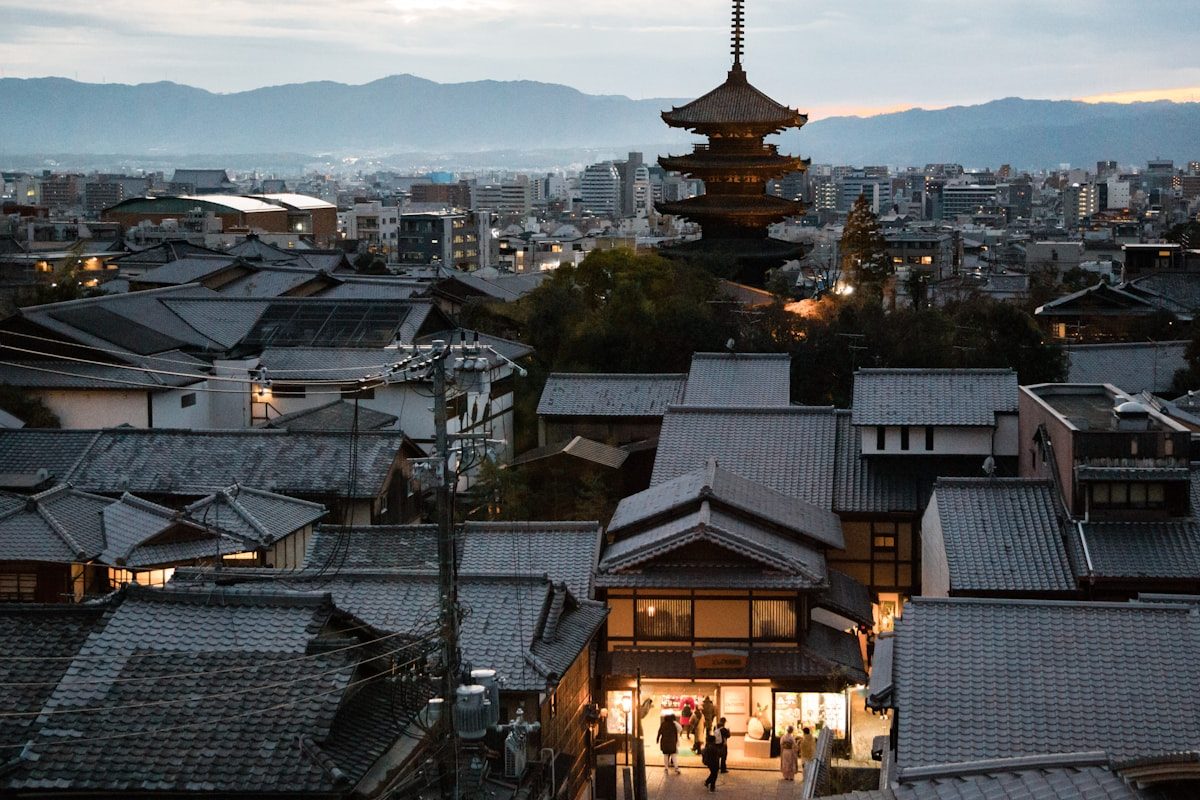
Kyoto, Japan
Asia

Kyoto

Japan

A thousand temples and the slow rhythm of old Japan.

Language
Japanese
Currency
Japanese yen (¥)

Loading rate…

Best months
Late Mar–Apr (sakura), Nov (foliage)
When to avoid
Jul–Aug (hot, humid)

Build your Kyoto itinerary

Choose how many days you have and we'll lay out a day-by-day plan built around the experiences and flavors you can only get here. Pick anywhere from one to five days below.

Trip length
A tailored 3-day plan for Kyoto
Day 1

Higashiyama Classics

KIYOMIZU · PHILOSOPHER'S PATH · NANZEN-JI
  1. 6:30a
  2. ~9:00a
  3. ~10:00a
  4. ~12:30p
  5. ~2:30p
  6. 5:30p

This day works because it's one north-flowing line — Kiyomizu to Nanzen-ji with no backtracking. If Hyōtei's main room is full, the annex (Hyōtei Bekkan) serves the morning porridge as a consolation worth having.

Day 2

Arashiyama & the West

BAMBOO GROVE · TENRYU-JI · PONTOCHO
  1. 7:00a
  2. 8:30a
  3. ~11:45a
  4. ~1:30p
  5. ~6:30p

Arashiyama rewards the early alarm more than anywhere in Kyoto — by 10am the grove is a queue. The afternoon villa is the decompression before Pontocho.

Day 3

Fushimi, the Market & Gion

FUSHIMI INARI · NISHIKI · HANAMIKOJI
  1. 6:45a
  2. ~10:30a
  3. ~12:30p
  4. ~2:30p
  5. ~5:30p

Fushimi Inari at dawn and Gion at dusk bracket the day's two best light windows; the market fills the middle. Photograph maiko respectfully — from a distance, never blocking their path.

Kōyō · maple season

Autumn in Kyoto

Mid-November to early December

Kyoto is arguably the finest place on earth to watch the leaves turn. The old capital's hillside temples and garden ponds were composed centuries ago with this exact fortnight in mind — maples (momiji) flaring crimson against moss, raked gravel, and dark temple timber. Peak colour usually lands in the third week of November and holds into early December.

What to see

  • Tōfuku-jiThe headline temple for autumn — the Tsūten-kyō bridge floats over a valley of 2,000 maples. Go at opening to beat the crush.
  • Eikan-dōA hillside of layered maples around a pagoda, and one of the great evening illuminations (yoru no momiji).
  • ArashiyamaThe bamboo grove plus Tenryū-ji's pond garden and the Ōigawa river framed in colour — best very early.
  • Nanzen-ji & the Philosopher's PathThe brick aqueduct, the sub-temple gardens, and a slow canal-side walk under the maples.
  • Kiyomizu-deraThe great wooden stage above a sea of red, lit up after dark in the autumn-night opening.

What's in season

  • Hassun & kaisekiAutumn kaiseki leans on matsutake mushroom, chestnut, ginkgo nuts, and hamo-and-matsutake hotpot.
  • MatsutakeThe prized pine mushroom is at its peak — grilled simply or in a clear dobin-mushi broth.
  • Warm obanzaiKyoto's home-style small dishes turn to simmered roots and squash as it cools.

Timing: Autumn is peak season — book stays and any kaiseki counter well ahead, and start temple days at opening (often before 8am). Evening illuminations at Eikan-dō and Kiyomizu-dera are worth a second visit after dark, but draw crowds; weekday nights are calmer.

The specialty of Kyoto

Eat it here, then bring it home

Kyoto, the old imperial capital, is the home of refined kaiseki, Buddhist temple cooking, and a centuries-deep tea and sweets tradition — a quieter, more ceremonial counterpoint to Tokyo.

Signature dishes

Unique local ingredients

Artisan goods to take home